Designed and built in-house
The hardwarecame first.
Adaptiv designs, manufactures, and operates its own devices — Smart Displays, sensors, and connected hardware purpose-built for the physical environments they serve. Software-only competitors can build agents; they can't ground them in telemetry from hardware they own.
The Adaptiv hardware family
One family.Every surface of the building.
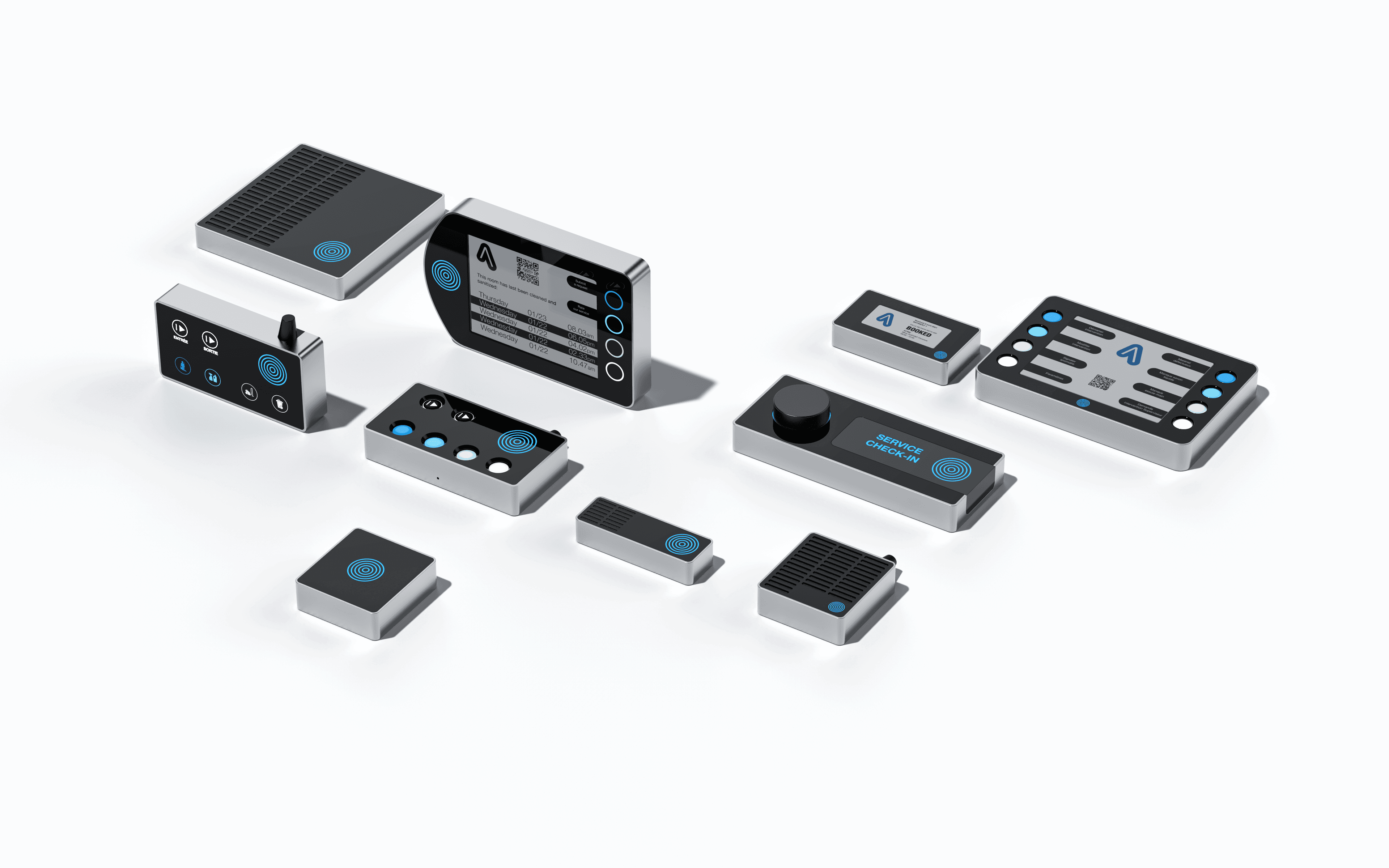
Smart Displays, gateways, and a full library of sensors — every device designed, engineered, and manufactured in-house to a single design language. One look, one platform, one source of telemetry.
ADAPTIV SMART DISPLAY
The face ofphysical AI.
Most AI systems are invisible. Physical AI has to be different. The Smart Display is where Merlin's intelligence becomes visible — at eye level, in the corridor, in the restroom, in the lobby. It turns abstract backend reasoning into something occupants can see, touch, and trust.
Sensor · Gateway · Interface — all at once. Battery and e-ink. No power infrastructure.
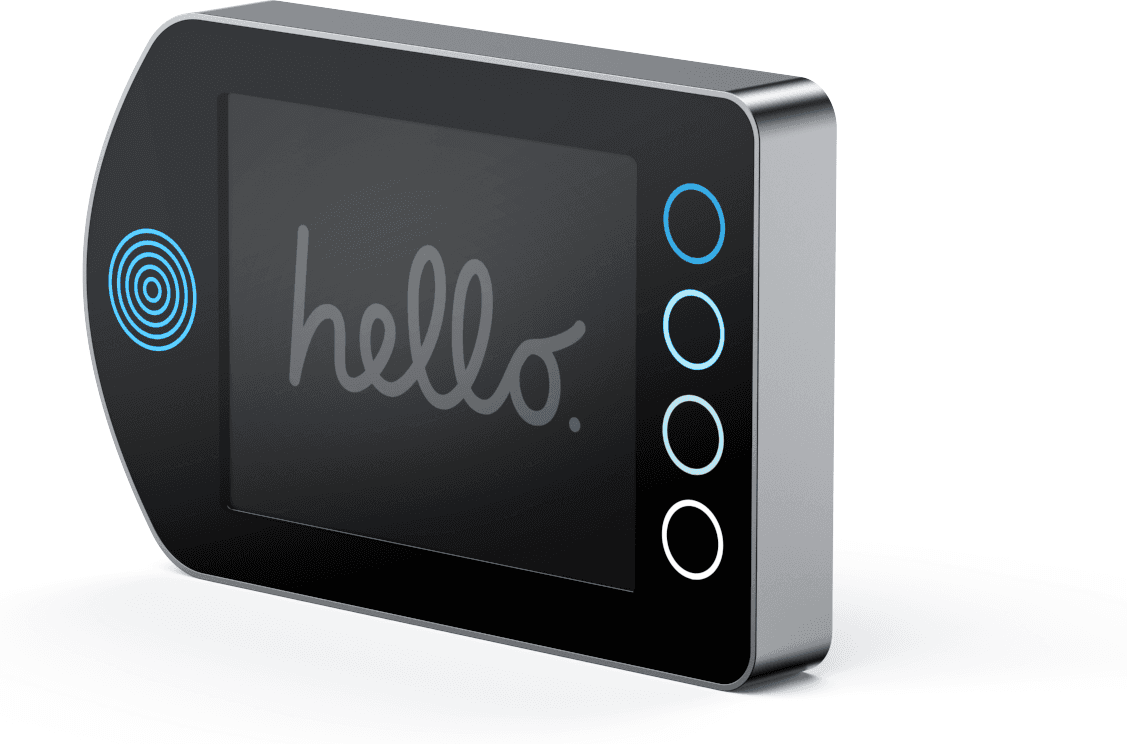
SENSOR, GATEWAY, AND INTERFACE — ALL AT ONCE
Three roles.One device on the wall.
It is a sensor
Seven embedded sensors capture environmental conditions, register occupant feedback, and verify staff identity via NFC for service-confirmation flows.
It is a gateway
Each Smart Display aggregates data from nearby wireless peripheral sensors and relays it to the cloud — no SIM card, no separate gateway hardware, no additional network infrastructure.
It is an interface
Merlin's intelligence is presented back to occupants in real time, and occupants interact with it directly through the display. The handshake between the building and the people inside it.
Battery and e-ink, no infrastructure
A hidden sensor can measure but cannot communicate. A traditional screen can display but cannot sense. The Smart Display does both — and because it runs on battery and e-ink, it installs anywhere without power infrastructure. Every wall in every corridor, restroom, lobby, and stairwell becomes an intelligent node.
WHAT IT SHOWS
The handshakebetween the buildingand the people.
In a restroom
When it was last cleaned and by whom · current air quality · room temperature
In a corridor or lobby
Occupancy patterns · environmental conditions · status of the spaces around it
Everywhere
A single tap to request service, report a problem, or send feedback to the team responsible
Sensor (embedded)
Environmental conditions · occupant feedback · NFC staff verification
Gateway
Aggregates wireless peripherals · own LTE uplink · no SIM in the room
Interface
Merlin in real time · one-tap service from anyone in the room
Power
Battery — multi-year autonomy. No power infrastructure required
Display
E-ink for low power and at-a-glance legibility
WHAT IT SHOWS, WHERE
Different space.Same handshake.
Restroom
- When it was last cleaned and by whom
- Current air quality and temperature
- One-tap service request
- Dispenser and consumable status
- Cleaning team accountability surfaced to occupants
Corridor & lobby
- Occupancy patterns in real time
- Environmental conditions for the area
- Status of the spaces around it
- Wayfinding and announcements
- Service requests routed to the right team
Meeting rooms & offices
- Real-time occupancy and air quality
- One-tap report-a-problem
- Room-level environmental confirmation
- Hand-off to facility and HVAC agents
- Quiet, glanceable surface — no screens that nag
Operational spaces — pharmacy, freezer, plant floor
- Continuous compliance state visible to staff
- Audit-grade events surfaced where work happens
- One-tap acknowledgment and follow-up
- Handover-ready summaries for shift transitions
- Direct line to the specialized agent on duty
THE SENSOR LIBRARY
Eyes and earsat every point.
The Smart Display is the hub. Around it, Adaptiv has designed and manufactures a growing library of independent wireless sensors. Each one operates entirely on battery, communicates with the nearest Smart Display over short-range wireless protocols, and relies on the display as its sole gateway to the cloud. No SIM cards. No wiring. No separate network infrastructure. The display is the hub. The sensors are the nodes. Together they give Merlin eyes and ears at every location that matters.
People counters
Measure foot traffic at entrances, corridors, and zones where occupancy patterns drive operational decisions.
- Entrance and corridor coverage
- Privacy-respecting counting
- Meshes through nearest Smart Display
Dispenser level monitors
Track soap, paper towel, and sanitizer fill levels in real time, so cleaning agents dispatch before anyone runs out.
- Per-fixture visibility
- Predictive restock signals
- No retrofit plumbing
Leak detectors
Alert within seconds of water presence. The cold-chain and HVAC agents reason over the event the moment it's reported.
- Seconds-to-alert
- Place anywhere on a floor
- Battery autonomy in years
Door and stall occupancy sensors
Detect open and closed states for stalls, doors, and gates. The cleaning agent uses this to schedule around real occupancy.
- Open/closed state
- Stall-level cleaning intelligence
- Adhesive-mount, no wiring
Bin level sensors
Measure waste container fill levels so collection routes match reality, not a fixed schedule.
- Fill-level visibility
- Demand-driven collection
- Indoor and outdoor models
Radar sensing devices
Privacy-safe millimetre-wave occupancy detection. Where cameras are not appropriate, radar carries the load.
- Millimetre-wave
- No image capture
- Robust through partitions
Machine vision devices
Visual anomaly detection in demanding environments — manufacturing floors, critical infrastructure, hazardous areas.
- On-device inference
- Visual anomaly flags
- Built for demanding environments
Smart lighting
Illumination combined with embedded occupancy and energy sensing — the HVAC and energy agents use it as additional ground truth.
- Occupancy + energy sensing
- Built-in dimming + scenes
- Coordinates with the agent fleet
HOW THE LIBRARY GROWS
Discipline overproliferation.
Adaptiv continuously evaluates new sensing technologies to add to the library. The ecosystem grows with intention rather than proliferation — each addition strengthens Merlin's model of the building rather than adding noise. For customers, the implication is straightforward: the platform you deploy today becomes more capable over time as new sensor types are added to the library, without any change required to the Smart Display infrastructure already on your walls.
Unique signal
Does the sensor capture a signal Merlin cannot already infer from existing data?
New coverage
Does it extend coverage to a location or modality the Smart Display cannot reach?
Cost-justified
Is the hardware and deployment cost justified by the operational intelligence it provides?
Wireless by default
Battery-powered, meshing through the nearest Smart Display — no SIM, no wiring, no separate hub.
No re-installation
New sensor types deploy into existing Smart Display networks. Nothing on the wall has to change.
Curated, not catalog-driven
We add a sensor when it makes Merlin more capable. We don't add a sensor because we can.
More sensors isn't more intelligence — more well-chosen sensors is
Every addition has to earn its place in the building, not just the catalog
Operators don't pay an integration tax every time the library grows
Merlin's model of the building deepens with each addition, rather than fragmenting
ONE MESH, ONE PLATFORM
No SIM cards.No wiring.No separate hub.
The Smart Display and its peripheral sensors form a mesh. The display is the hub. The sensors are the nodes. They route everything through the display's own LTE connection, so there's no SIM card in the sensor, no shared Wi-Fi to negotiate, no separate gateway hardware to maintain. One physical layer for the whole agent fleet to reason on top of.
The platform you deploy today becomes more capable over time — without any change required to the Smart Display infrastructure already on your walls.
Every sensor in the Adaptiv library connects to the nearest Smart Display over short-range wireless. The Smart Display handles the LTE uplink, edge pre-processing, and data forwarding to Merlin. New sensor classes are added as they meet the three-criteria test. Existing walls inherit them without re-installation.
Industrial design
Designed in-house,down to the millimetre.
Every device shares one design language — machined housings, a single tactile interaction point, and screens built for glanceability. A closer look at the range.
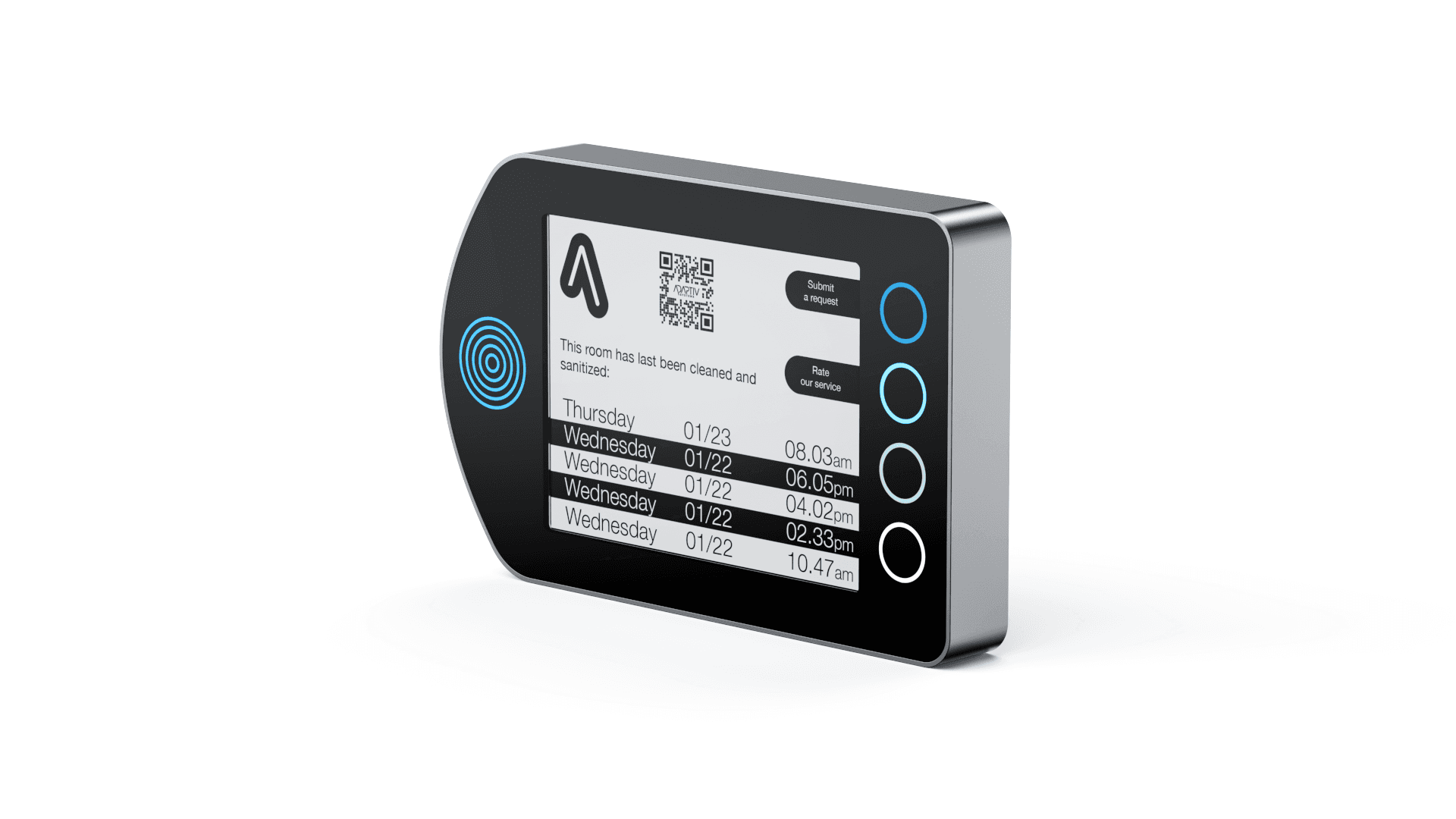
Smart Display
Live service status and on-demand requests, on the wall where it matters.
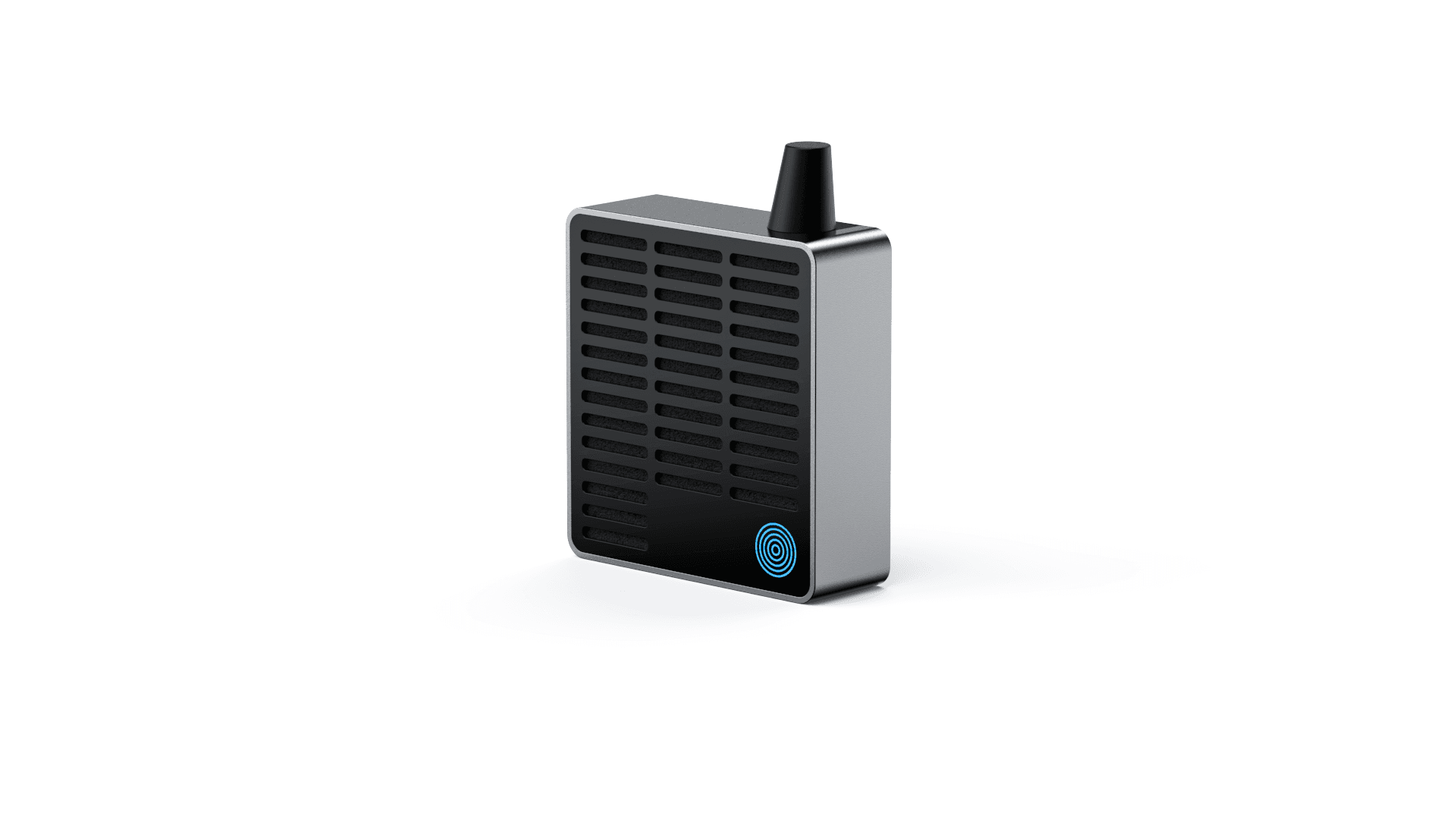
Mesh gateway
Bridges the sensor library to the platform across the whole building.
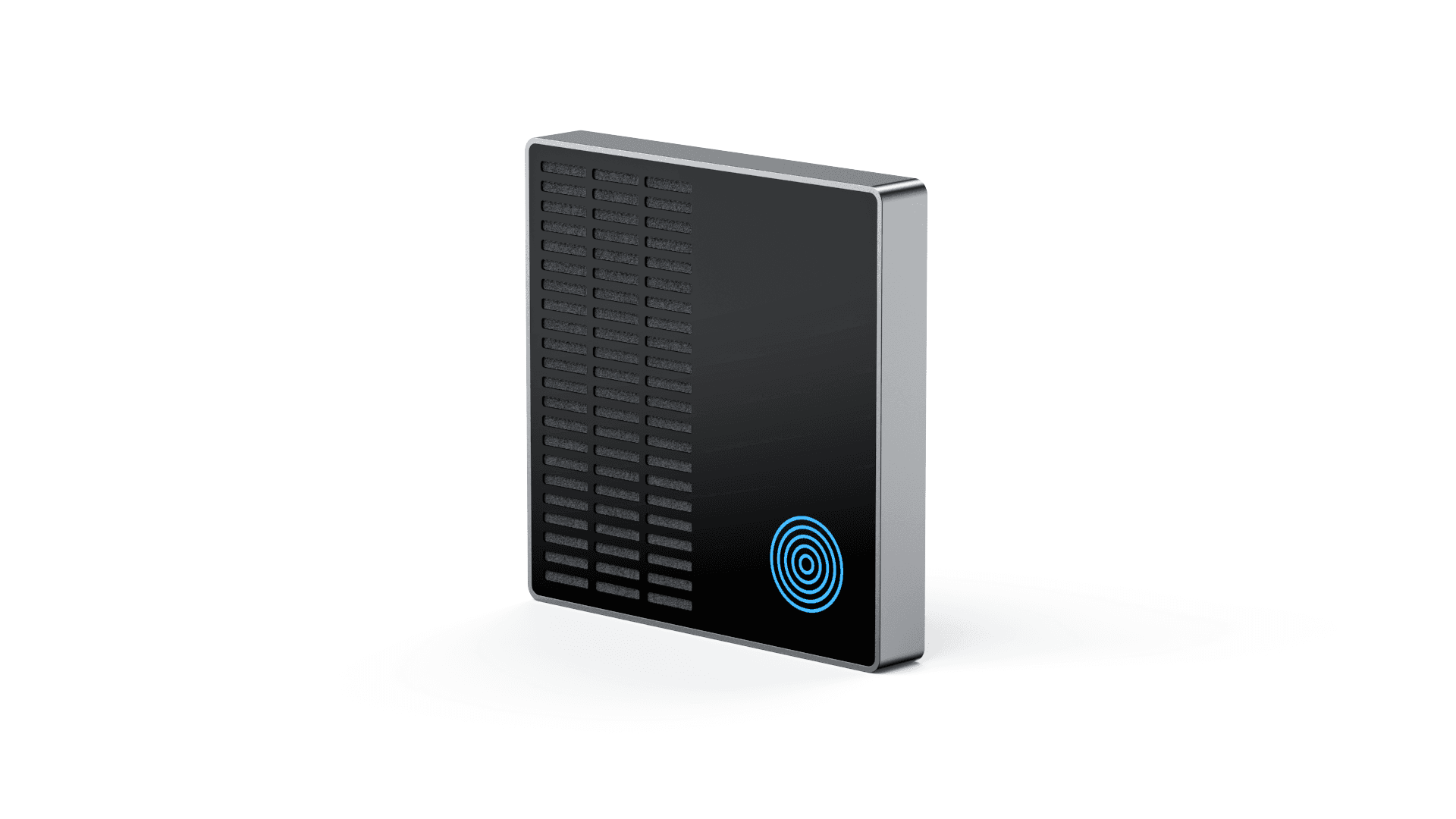
Area sensor
Low-profile environmental and occupancy sensing for any space.
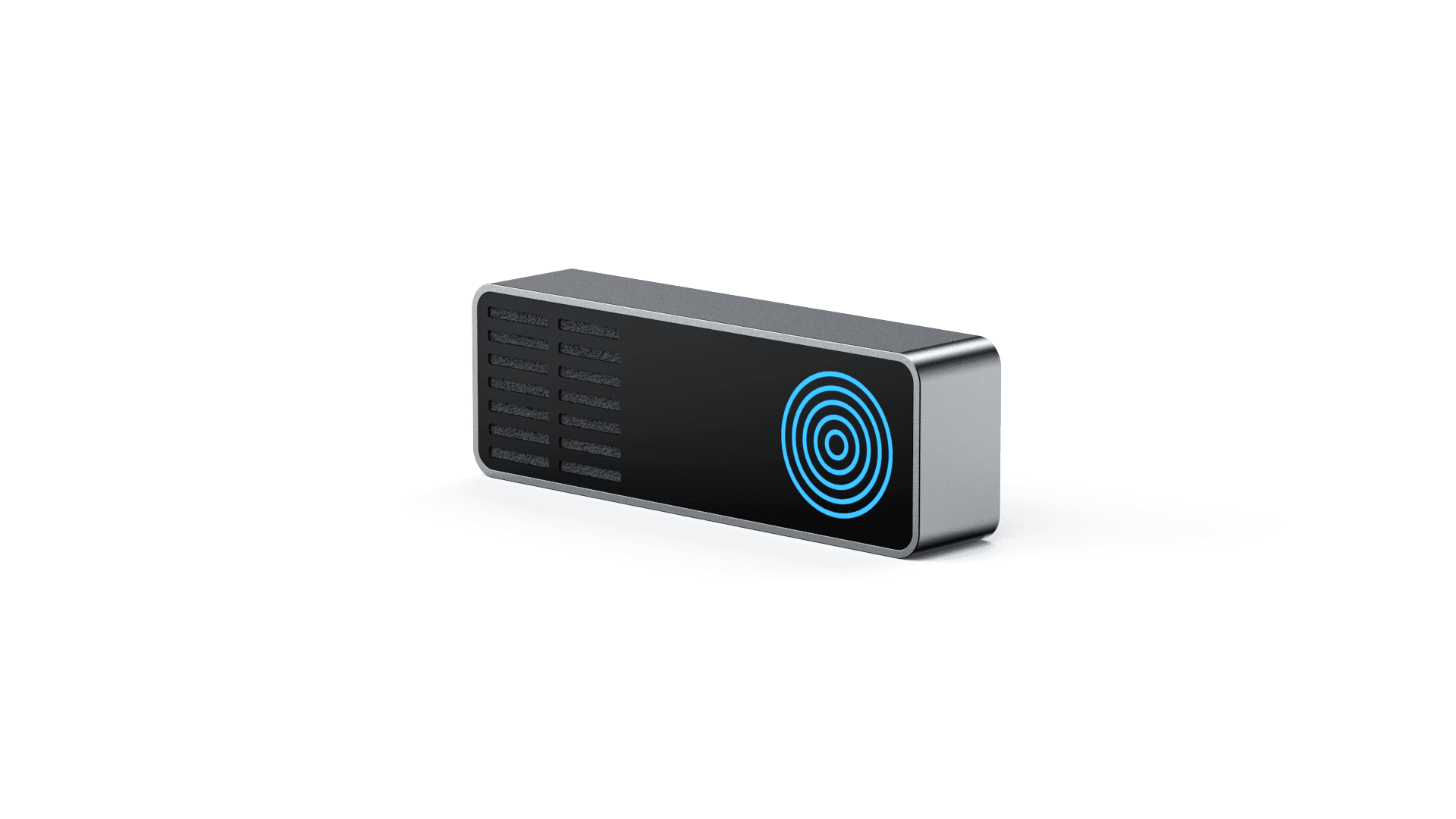
Compact sensor
Drop-in telemetry where a full panel won't fit.
OUR DEVICES, OUR DATA, OUR BUILDINGS
Designed,manufactured,and operatedin-house.
Most companies trying to build AI for physical spaces start from scratch — software layered on top of whatever third-party sensors happen to be installed. They don't own the hardware. They don't control the data quality. They're guessing what the world looks like, based on signals they didn't design.
Adaptiv is different. We design, manufacture, and operate our own devices — purpose-built for the physical environments they serve. The hardware came first. The data came from the hardware. The AI is built on the data.
The hub and the mesh. Ready when you are.
Whether the deployment is a single meeting room or a portfolio of buildings, the architecture is the same: Smart Display on the wall, sensor library in the mesh, agent fleet reasoning on top.